When Google Search starts to become an agent in its own right
By Wendy Harris·20 May 2026·6 minute read
I watched Google's I/O keynote yesterday. All of it. And if you are running a business in the visitor economy and you use Google Workspace even a little, I think it is worth an hour and a half of yours too. Not because every announcement directly affects you right now, but because the direction of travel is genuinely significant and it is better to form your own conclusions from the source than to read someone else's summary of someone else's summary.
That said, here is what struck me, and why I think it matters for what I am building with glassmark.
Something has shifted in what Google is trying to be
For as long as most of us have been online, Google's job was simple: find the thing and point you at it. You typed a question, it returned a list of ten links, you clicked one. Google was useful because it knew where things were. Your website was the destination.
What I watched yesterday was Google describing a different job for itself entirely. Not a search engine that answers, but one that acts. The phrase they kept returning to was "agentic", and I think it is worth understanding what that actually means rather than letting it wash over you as tech jargon.
An agent, in the AI sense, does not just respond to a question. It pursues a goal on your behalf, continuously, without you needing to be at the keyboard. Google announced what they are calling information agents: persistent, always-on assistants that a user can set up inside Search, give a set of criteria to, and leave running. The agent monitors the web in the background and surfaces results when something matches.
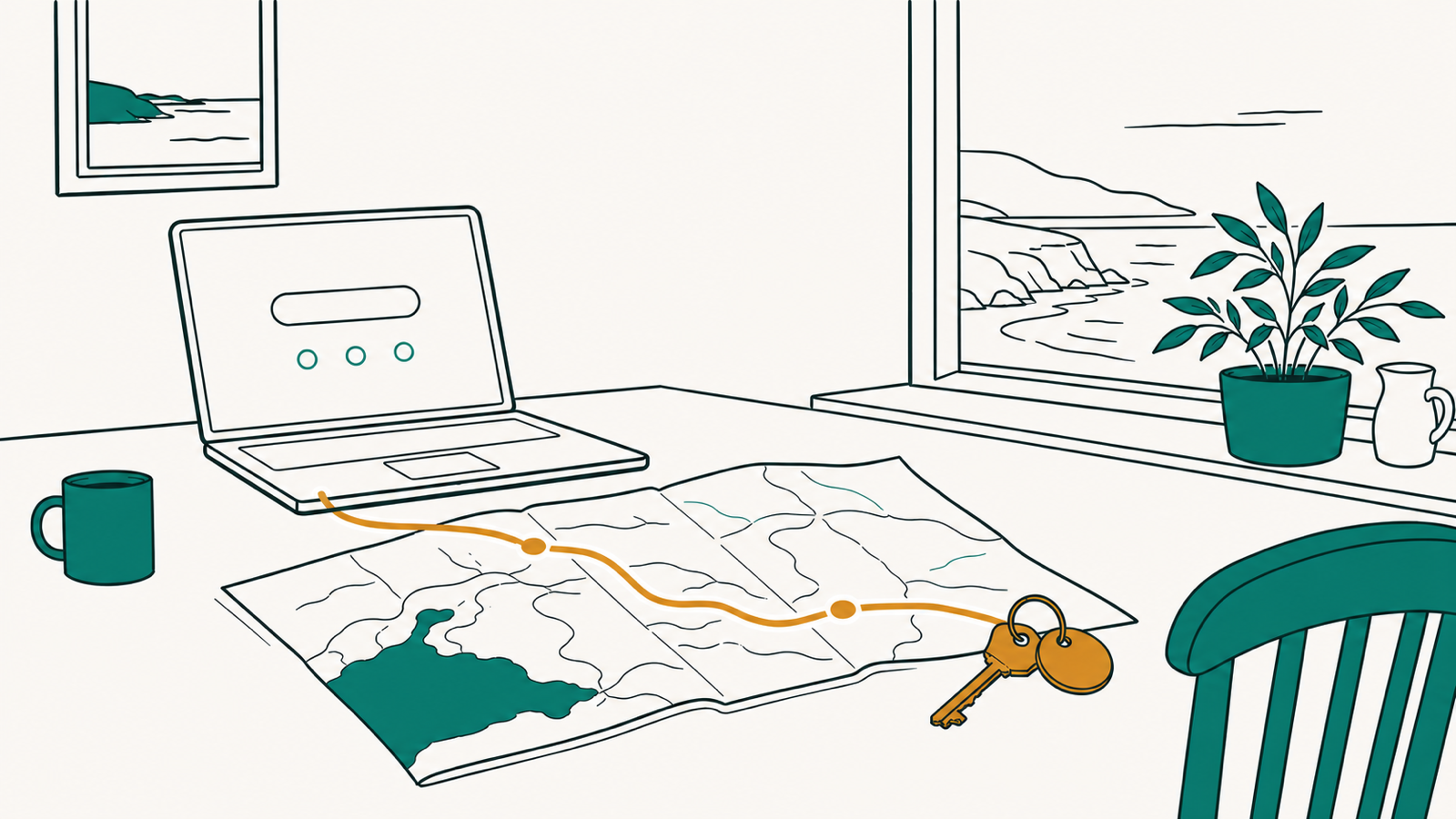
Their example was someone looking for a holiday cottage. You give the agent your requirements. It runs. When something fits, it tells you.
No one is typing. No one is searching. The agent is doing it.
This is a meaningful shift. Not because it will happen overnight, but because the direction is now clear, and the businesses that understand it early will have a head start on the ones who are still optimising for a version of Google that is already changing.
What the agent sees when it visits you
The thing I keep coming back to is this: if an agent is shortlisting your business on someone's behalf, what does it find when it visits your website?
Not your Google Business Profile. Not your TripAdvisor listing. Your actual website.
Does it find your opening hours, and are they right? Not the ones you updated eighteen months ago when you changed your winter schedule. The ones that are true today. Does it find your pricing, clearly stated? Your dog policy, if that is relevant, and what it actually means in practice? Does it find out what someone will experience when they arrive, in enough detail to make a recommendation with confidence?
The six categories glassmark checks are not arbitrary technical boxes. They are the questions any traveller would ask before choosing your business.
Who and what is this place? Where exactly is it, and how do I get there? Can I find the answers to my basic questions, what it costs, when it's open, what's included? Is there evidence that other people have had a good experience here? Can I actually make a booking or enquiry? And can an AI system physically read the site at all?
These are good questions to ask yourself about your own website, independent of anything AI-related. Most businesses in the visitor economy will get some of them right. The work is finding where the answers are missing, partial, or just quietly out of date, and fixing them before the gap becomes a problem.
Why this matters now and not in two years
I keep seeing the same pattern across visitor economy websites. The information is mostly there, but it has drifted. Prices from last season. Policies buried in a paragraph of general text. Opening times that have not been touched since the site was redesigned three years ago. Nobody set out to mislead anyone. These things just slip.
When a human visitor notices a gap, they call. Or they email. Or they click through to your booking system to check. An AI agent does not. It either finds a clear answer or it moves on to the next option.
This is exactly why I built glassmark. Not to add another layer of technical complexity for small visitor economy businesses, but because I kept seeing this problem and thinking that the businesses who fix it now, quietly, before the pressure is acute, will be in a far stronger position than the ones who wait.
Watch it yourself
The Google I/O keynote is free to watch. I would suggest starting with the Search portion if you are short on time, though the Workspace section is also worth your attention if you use Google tools day to day. Watch it with your own business in mind, rather than through a filter of what any newsletter has decided it means.
The shift is real. The pace is faster than most people realise. And the work of making sure your website is ready for it is mostly not technical. It is about making time to look at your own content as if you had never seen it before, and asking whether it actually answers the questions someone planning a trip would need answered.
If you want to start somewhere concrete, run a free glassmark scan at glassmark.ai. It will show you what AI can and cannot understand about your business right now, in plain language, with no assumptions that you have a developer on hand.
That feels like a reasonable place to begin.
Watch and read more
- Google I/O 2026 keynote (YouTube)
- Google Search's I/O 2026 updates: AI agents and more (Google blog)
- Google launches always-on information agents in Search (The Next Web)
- Google prepares travel's next platform shift (Hospitality Today)
- Google I/O 2026: how the AI search update changes SEO visibility (Launchcodex)
glassmark is an AI readiness audit tool built for the visitor economy. It scans your website and shows you exactly what AI agents can and cannot understand about your business.
See what AI sees: glassmark.ai
A product of Fourteen Seed | fourteenseed.com